

Photo by Jason Hollinger
This file is licensed under the Creative Commons Attribution 2.0 Generic license.
Taxus brevifolia
Also Known As
- Pacific Yew
- Western Yew
Plant type
tree, conifer
size
- H: 20'-50'
- W: 20'-40'
planting zones
- 6a-9b
Taxus brevifolia plant details
Taxus brevifolia is an evergreen conifer tree with green foliage. Features glossy texture. Grows well with mostly shade - shade and regular - low water. Drought tolerant once established. Does well in average and well-drained soil. A good option if you're seeking something verticillium wilt resistant.
CHARACTERISTICS OF Taxus brevifolia
- Plant type: conifer tree
- Plant family: taxaceae
- Foliage: evergreen green
- Mature size: 20 FT - 40 FT - wide, 20 FT - 50 FT - tall
- Uses: peeling bark, year round interest
GROWING CONDITIONS for Taxus brevifolia
- USDA Zones: 6a - 9b
- Sun exposure: mostly shade - shade
- Watering frequency: regular - low
- Resistant to: verticillium wilt
- Soil needs: average and well-drained
Nursery contributed plant descriptions


By: Forestfarm
Garden photo gallery of Taxus brevifolia

By: Jason Hollinger
This file is licensed under the Creative Commons Attribution 2.0 Generic license.
View Original Photo
By: Walter Siegmund
This file is licensed under the Creative Commons Attribution-Share Alike 3.0 license.
View Original Photo
By: Walter Siegmund
This file is licensed under the Creative Commons Attribution-Share Alike 3.0 license.
View Original Photo
By: Walter Siegmund
This file is licensed under the Creative Commons Attribution-Share Alike 3.0 license.
View Original Photo
By: Walter Siegmund
This file is licensed under the Creative Commons Attribution-Share Alike 3.0 license.
View Original Photo
By: Walter Siegmund
This file is licensed under the Creative Commons Attribution-Share Alike 3.0 license.
View Original PhotoGardening facts about Taxus brevifolia plant
How to Grow Taxus brevifolia
Sun Exposure
- mostly shade - shade
Water Needs
- regular - drought tolerant
Soil Needs
- average
- well-drained
Special Situation
- verticillium wilt resistant
Features
Foliage Color
- green
Foliage Season
- evergreen
Texture
- glossy
Landscape groups by tags
See other plant types of Taxus for your garden
Plant Type
Shrub, Conifer
Zones
4a-7b
Size
Height: 4'-6'
Width: 5'-7'
- sun - mostly sun
- regular - occasional

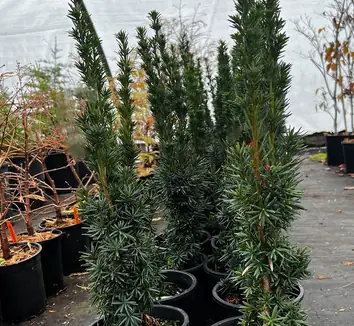
aka Filip's White Column English Yew
Plant Type
Tree, Shrub, Conifer
Zones
6a-9b
Size
Height: 5'
Width: 1'
- sun - mostly sun
- regular - occasional

aka Taxus x 'Media Beanpole', Taxus x media 'Bean Pole', Bean Pole Yew
Plant Type
Tree, Shrub, Conifer
Zones
4a-9b
Size
Height: 36"-72"
Width: 6"-12"
- sun - shade
- regular
aka Decussocarpus falcatus, Nageia falcata, Podocarpus falcatus [UCSC95.340], Taxus falcata, False Yellowwood, Outeniqua Yellowwood, Sickle-leaved Yellowwood
Plant Type
Tree, Conifer
Zones
8a-11
Size
Height: 30'-80'
Width: 15'-50'
- sun - dappled shade
- regular - drought tolerant
![Photo of Afrocarpus falcatus [UCSC95.340] form by Abu Shawka](https://d3bbsv6h7qkr8y.cloudfront.net/34/7a/347afd5b3cd89e5ef66ee1330d41052e.webp)
aka English Yew, Yew
Plant Type
Tree, Shrub, Conifer
Zones
6a-9b
Size
Height: 5'-8'
Width: 2'-5'
- sun - shade
- regular
Mailing List
Sign Up for updates on new plant arrivals and deals© 2010—2026 Plant Lust, LLC All Rights Reserved